Subscribe

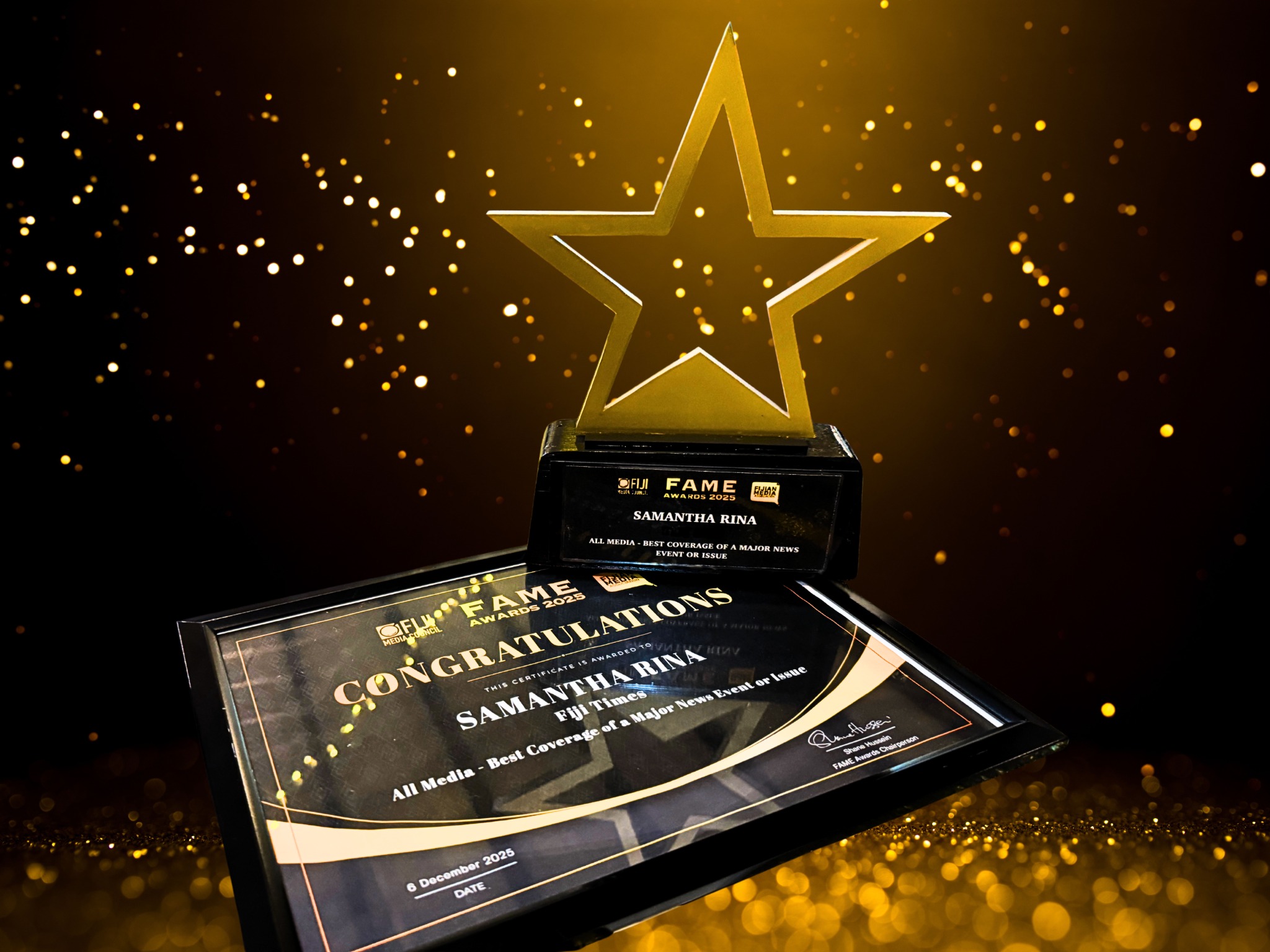
A collection of articles and stories by Samantha Rina and a few that capture her achievements.

Filters & Sorting

Connection before correction

TWENTY years ago, Merina George was a young classroom aide walking home with bruises and bite marks on her arms. She wondered why the five-year-old she was assigned to support went from calm one day to violent the next. “I would ask myself every day what I was doing wrong,” she said. “He would bite, hit, and sometimes I felt completely lost. Nothing in my training prepared me for it. I would go home exhausted and crying, asking myself if I was failing him.” At the time, autism was rarely spoken...

Dark side of the scroll

IMAGINE you are 19 years old. You have just won a local title. Even before the applause fades, your “country” turns on you – with fingers pointed at your face, your body, your right to even stand on that stage. The comments are brutal. Multiple fake accounts emerge, to mock and shame you. And somewhere in your direct messages, a stranger tells you to “kill yourself”. This is technology-facilitated gender-based violence, or TFGBV, defined by the UN as any act of violence committed, assisted, aggr...

A dollar, a dream and a calling

ADI Salaseini Kavu Fong had just retired. But when she thought she was done, a new calling beckoned. A request from the Tui Cakau set her on a new path – one that she has committed to for more than 20 years. When she walked into the Soqosoqo Vakamarama iTaukei Cakaudrove (SVTC) in 2005 as its new president, there was barely anything to go by. Everything the organisation had ever known lived only in the memory of its women, passed down by mouth through generations. “I didn’t know what I was getti...

The missing measure

FIJI has committed $F116million across 35 gender programs since 2020, but when it comes to where that money went, who it reached and how it impacted their lives for the better, we lack a transparent system that provides honest, clear answers. These are figures that come from Fiji’s own Beijing+30 country progress report which was submitted to UN Women in 2024. The report records the spending. It also acknowledges that gender-responsive budgeting is still being rolled out across government. The s...

The price of progress

“MY darkest moment was the May 1987 military coup. I was angry that a contract was broken. It dawned on me for the first time that a major challenge for Fiji people was to understand human rights.” Those were the words of Amelia Vakasokolaca Rokotuivuna, as recorded in the book 1000 PeaceWomen Across the Globe, published in 2005, which documented the lives of women nominated that year for the Nobel Peace Prize. She had spoken from experience. She was briefly imprisoned for defying the coup. She...

8 March: More than a date

FOR most women in Fiji, International Women’s Day looks exactly like the one before it. The school uniforms and working clothes need ironing. The market stall needs setting up. The wage from last week is already gone and the week is not. Somewhere in between, a date on the calendar that the rest of the world is marking with speeches and hashtags passes without a second thought. International Women’s Day has been observed every March 8 for over a century. It was born from the kind of exhaustion t...

Invisible 'disability'

FOR years, Sera Osborne showed up. Her brother was confined to a wheelchair and needed a support person to help him get to work everyday. But for all her selflessness, there was a heaviness she battled alone. The mood swings she couldn’t explain. The depression that crept in uninvited. The suicidal thoughts she had no name for, and no one to tell. Until one day, after helping her brother get to work at the Spinal Injury Association, it was there, in a quiet conversation with a woman named Lela,...

Make room at the table

AT just 24, Sabina Moce has come a long way. Living with albinism meant she struggled a bit more than most of her classmates when it came to learning. Today, she sits in policy rooms where disability is discussed and has represented the Pacific at key regional events. “Some of the effects of albinism are that I’m short-sighted. I cannot see very far. I cannot go into the sun for a long period of time. If I do, I need to put on sunscreen, wear a hat, long-sleeved clothing, and use an umbrella,” s...

Hands that speak

FELICITY Ali communicates in a language that only an estimated 3.3 per cent of people in Fiji understand. She was not born into it, nor did she take up formal training to learn. It was her students who taught her how to communicate with them. Twenty-one years ago, Ms Ali joined the Gospel School for the Deaf as a librarian but when a teacher left without warning, she was asked to stand in by the school’s director at the time, Jim Cooney. As he watched her interact with the class over several day...

Breaking through with humour

TEN years ago, Greg Randin arrived in Dawasamu, Tailevu as a 19-year-old volunteer. He barely spoke English, had never taken a cold shower and felt like he was on Mars. Today, the French-born anthropologist is a familiar figure on Suva’s streets and on social media – trading jokes in fluent Fijian, drawing crowds of all ages, and holding attention in a space where most messages are scrolled past in seconds. But the laughter is deliberate. Randin has harnessed humour to engage young Fijians on ed...

Healing the land

THERE is a weight in Seci Waqawai’s eyes that is hard to ignore — they tell the story before he speaks. “Something is not right,” he says, the heaviness in his voice tinged by decades of watching his surroundings shift. At almost 70, he remembers a time when certain mussels and fish could be found in abundance in the rivers near Wailevu Village in Macuata where he grew up. He also remembers a time when the land produced without struggle, and how the forest foretold the weather even before the cl...

The long, cold walk in the dark

At 3am, while most of Fiji still sleeps, Vani Sulua and her husband begin their trip to the market. In the darkness, they wade through the cold Wainimala River, lifting sacks of root crops and vegetables above the water to keep them dry. At the riverbank, they try to stay warm as they wait for the carrier that will take them into town, a routine that has become their only way to earn a living. From Nasivikoso Village in Magodro, Ba, Vani, 31, now lives in Waibasaga, Wainimala, in Naitasiri with...

$3.2m project, no water

TEN villages on Moturiki Island remain deprived of access to clean and consistent water supply despite the commissioning of a $3.2million water project on the island in 2022. Over the last three years, water committee representatives from each village have made numerous journeys – first, by boat from their villages to Ovalau, then, on foot to the hills of Navuloa Village — to determine the cause of water disruptions and attempt to repair it, often without the help of the Water Authority of Fiji...

New research calls Fiji’s GBV response a ‘failure’

FIJI’S national response to gender-based violence (GBV) has failed to stop the killings, with 57 women now dead at the hands of their partners or spouses. This was among the confronting findings revealed in new research by Avelina Rokoduru, a Doctor of Philosophy candidate at the University of Otago in New Zealand, who says the four-decade-long GBV strategy must be urgently reviewed. “Despite four decades of national, regional and international response, GBV especially in the form of intimate pa...

The woman who served 16 top diplomats

WHEN Lusiana Kausoqo first walked into the Australian High Commission in 1982 for a job interview, she was crippled with fear. It was the woman who was coaxing and guiding her at the elbow - her employer at the time, Penny-Ana Urwin - who was adamant that Ms Kausoqo, then 25, would complete the interview process. “I was very nervous and scared that day,” said Ms Kausoqo. “I had never been to a massive house like that.” At 68 years of age, Ms Kausoqo – known as Lusi to many – has served at least 1...

Fix the water crisis, Government urged

FIJI is facing a water crisis and the Government must commit to fixing water issues experienced around the country. In a statement by the Non-Governmental Organisation Coalition on Human Rights (NGOCHR), group chair Shamima Ali called for urgent action to address the crisis. “For women, the water crisis is personal,” she said. “They are responsible for finding a resource their families need to survive – for drinking, cooking, sanitation, and hygiene. “They may stand in line and wait for water, t...

Push for women in energy sector

ONLY five per cent of technical roles in Fiji and the Pacific’s energy sector are held by women — a figure World Bank specialist Helle Buchhave says must change. “We are here to reflect honestly on where we stand in the energy sector regarding women’s employment, and more importantly, to talk together about the practical steps we take forward,” said Ms Buchhave, who is also the Task Team Leader for Pacific Women in Power. Presenting the findings of the World Bank’s latest Pacific Economic Update...
Load More Articles

Subscribe to get sent a digest of new articles by Samantha Rina

This site is protected by reCAPTCHA and the Google Privacy Policy and Terms of Service apply.